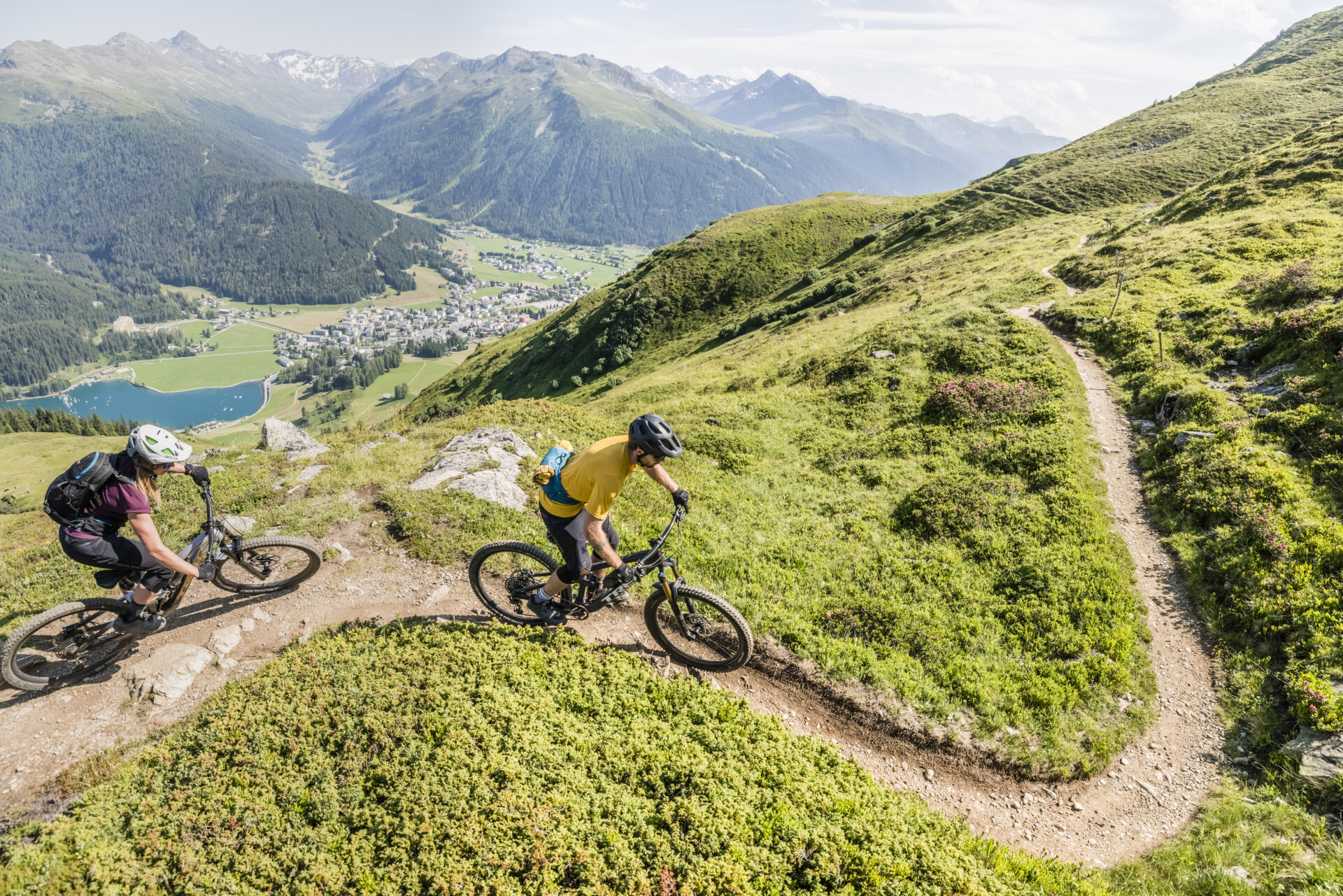
Imagine starting your ride in Switzerland, crossing into Austria or Italy within the same day, stopping at a traditional mountain hut for local food, and finishing with long natural singletrail descents surrounded by breathtaking alpine views.
That is what it means to bike the Alps. Every year, more riders search for the best way to experience e-bike tours in the Alps. But many quickly realize that riding here is very different from what they are used to.
The trails are more natural. The terrain is more technical. The weather changes faster. And conditions can shift from perfect to challenging within a short time. Many riders arrive expecting smooth bike park trails and are surprised within the first hour. But with the right preparation, an Alps e-bike tour becomes one of the most rewarding riding experiences in the world.
In this guide, you will learn how to plan your e-bike tour in the Alps the right way — from trail difficulty and weather to battery range, equipment, safety, and the best regions to ride.
What You Need to Know Before You Ride the Alps
Before you start your e-bike Alps tour, there are a few essential things to understand. Alpine riding is not just about distance and elevation. It is about terrain, exposure, weather, timing, technical skill, and local knowledge.
A route that looks manageable on paper can feel very different once you are riding natural singletrails, crossing high mountain passes, or descending rocky alpine terrain. The better prepared you are, the more you can enjoy the experience.
Trail Difficulty: Why Riding in the Alps Is Different
When you first bike the Alps, one thing becomes clear very quickly: alpine trails are often more technical than expected.
In North America and many bike parks, trails are frequently machine-built, marked clearly, and designed specifically for mountain bikes. In the Alps, many trails are natural. Some were originally hiking paths where biking is allowed or tolerated depending on the region.
That means you may encounter:
- rocks and roots
- tight switchbacks
- loose terrain
- exposed sections
- steep natural descents
- sudden changes in trail surface
- hiking traffic
The Singletrail Scale: S0 to S5
Many alpine routes use the Singletrail Scale to describe technical difficulty:
S0 — very easy
S1 — easy
S2 — intermediate and very common in the Alps
S3 — difficult
S4 — very difficult
S5 — extreme
A key point for visiting riders: S2 in the Alps can feel much more technical than an intermediate bike park trail.
This is where many riders underestimate the terrain. Even if you have bike park experience, natural alpine singletrails require different skills: balance, braking control, line choice, switchback technique, and the ability to stay calm on rough terrain.
Pro Tip
Take a mountain bike skills course before your trip, especially if you plan to ride singletrails. Better technique means more control, more safety, and more fun.
Plan Your Route Carefully
A successful e-bike tour in the Alps starts with proper route planning. Do not look only at kilometers and elevation gain. In alpine terrain, a short route can still be very demanding if the trail is technical, exposed, or remote.
Useful Planning Tools
Use several sources before deciding on a route:
- YouTube for real trail impressions
- Instagram and TikTok for current visual conditions
- Komoot for route planning
- Trailforks for trail information
- local tourism websites
- local guides and bike schools
What to Check Before You Ride
Before choosing a route, always check:
- total elevation gain
- technical difficulty
- Singletrail Scale rating
- trail exposure
- terrain type
- weather forecast
- charging options
- water and food stops
- escape routes
- lift or shuttle availability
- local bike rules
If there is very little information about a route, treat it carefully. In the Alps, “hidden gems” are often more difficult, less maintained, or less suitable for visitors.
Pro Tip
Choose routes that match your real skill level, not your ambition. The Alps reward good decisions.
Weather in the Alps: Fast and Unpredictable
Weather is one of the most important factors when riding in the Alps. A sunny morning can turn into a thunderstorm by the afternoon, especially in summer. Above the tree line, this can become dangerous very quickly.
What to Expect
In the Alps, you should be prepared for:
- rapid weather changes
- afternoon thunderstorms in July and August
- sudden drops in temperature
- strong wind at higher elevations
- slippery trails after rain
- poor visibility in fog or storms
Getting caught in a thunderstorm above the tree line is not something to take lightly. Visibility can disappear, trails can become slippery, and navigation becomes more difficult.
Use Local Mountain Forecasts
General weather apps are often not accurate enough for alpine riding. Use regional mountain forecasts and local weather services whenever possible.
Pro Tip
Start early, avoid exposed high-altitude sections in the afternoon, and monitor the weather throughout the day.
Best Time for E-Bike Tours in the Alps
The best season for e-bike tours in the Alps is usually from late June to late September.
June
Late June can be beautiful, but snow may still block higher passes, especially above 2,300 meters. Some alpine routes may not yet be fully accessible.
July and August
July and August offer full access to most routes and warmer temperatures. This is the main alpine riding season. However, these months can also bring frequent thunderstorms, especially in the afternoon.
September
September is often the best month for riding in the Alps. The weather is usually more stable, temperatures are ideal, and the trails are less crowded than in peak summer.
October
October can still be possible in some lower regions, but conditions become colder and early snow is possible at higher elevations.
Battery Management and Range
Battery management is one of the biggest mistakes riders make when planning an e-bike Alps tour. A route may look easy on paper, but alpine terrain can drain a battery much faster than expected.
What Affects Battery Range?
Several factors influence how long your battery will last:
- Terrain
Technical singletrails, steep climbs, and loose surfaces use much more energy than smooth gravel roads. - Rider and Bike Weight
A heavier rider, backpack, and bike setup will reduce range. - Assist Mode
Riding in Turbo or Boost mode for long climbs can drain the battery quickly. - Cadence
A steady, efficient cadence helps your motor work better and can improve range. - Temperature
Cold conditions can reduce battery performance.
Common Mistake
A common mistake is planning a 1,500-meter climb and assuming the battery will easily last the whole route. On steep alpine terrain, this is not always the case.
Recommendation
For multi-day alpine riding, use an e-bike with a 700–800 Wh battery whenever possible. Ride efficiently, plan conservatively, and never plan your day assuming you can use 100% of your battery.
The Right Equipment for Riding the Alps
The right gear can make a big difference during an e-bike tour in the Alps. Alpine weather and terrain can change quickly, so your equipment should cover both comfort and safety.
Essential Gear
Bring:
- helmet
- gloves
- cycling glasses
- waterproof jacket
- lightweight insulation layer
- spare tube or tubeless repair kit
- multitool
- pump or CO₂ cartridge
- chain link
- first aid kit
- charged phone
- navigation device
- power bank
- water and snacks
Very Important: Rain Shorts
One small item can make a huge difference: lightweight rain shorts.
They protect you from rain, mud, wind, and cold. Wet clothing can quickly ruin your day, especially on long descents or in changing weather.
For Bad Weather
For colder or wetter days, consider:
- neoprene socks
- neoprene gloves
- waterproof shoe covers
- extra dry base layer
Do Not Forget Cash
Always bring enough cash. You may need:
- Swiss francs in Switzerland
- euros in Austria, Italy, and France
Many mountain huts and remote restaurants do not always accept cards. Some locations have poor internet connection, and American Express is rarely accepted in alpine huts. Small details like this can decide whether your day runs smoothly or becomes stressful.
Trail Etiquette in the Alps
In the Alps, you share the trails with hikers, trail runners, farmers, and local communities. Good trail etiquette is essential.
Basic Rules
- ride in control
- slow down when approaching hikers
- announce yourself early and politely
- give hikers priority
- avoid skidding
- stay on marked or permitted trails
- respect local signs and restrictions
- close gates behind you
- do not ride on closed trails
When in doubt, get off your bike and walk. A respectful attitude helps keep trails open for everyone.
Safety and Emergency Situations
Even on the best bike tours in the Alps, accidents can happen. The terrain is remote in many areas, and phone signal is not always available. That means you should prepare before you ride.
Before Your Ride
Make sure you:
- know the local emergency numbers
- install relevant emergency apps
- share your route with someone
- check your insurance coverage
- know where you can exit the route
- carry basic first aid equipment
- keep your phone charged
- avoid riding alone in remote terrain
In Switzerland, the Rega app can be useful for mountain emergencies. In other alpine countries, check the relevant local emergency services before your trip.
Pro Tip
Do not ride alone in remote alpine terrain unless you have the right experience, equipment, and emergency communication options.
Guided vs. Self-Guided E-Bike Tours in the Alps
Self-guided tours offer freedom and flexibility. You can ride at your own pace, choose your route, and design your own adventure.
But this is also where the challenge begins. In the Alps, experience, planning, and timing make the difference between an unforgettable adventure and a stressful day on the bike.
Misjudging route difficulty, terrain, weather, or battery range can quickly turn a great plan into a difficult situation.
Why Guided Tours Make the Difference
A guided tour is much more than someone showing you the way.
With a professional local guide, you benefit from real regional knowledge. You ride better trails, avoid unnecessary detours, adapt to the conditions, and stay safer in alpine terrain.
A guided tour helps you:
- ride the best trails from the start
- avoid unsuitable routes
- adapt the day to the weather
- manage battery range better
- find the right lunch stops and huts
- understand trail difficulty
- avoid common mistakes
- focus fully on the experience
Many riders say after their first guided alpine tour:
We would never have found these trails on our own — and we would have underestimated the difficulty.
Pro Tip
If you want to get the most out of your time in the Alps, a guided tour is the best choice. You can focus on what really matters: the ride, the views, the trails, and the experience.
FAQ: E-Bike Tours in the Alps
1. How difficult is biking in the Alps?
Biking in the Alps is often more technical than riders expect. Many trails are natural singletrails with rocks, roots, tight turns, and exposure. S2 is a common level, but in alpine terrain it can feel more challenging than an intermediate bike park trail.
2. How many kilometers should I plan per day?
For most e-bike tours in the Alps, 30 to 50 kilometers per day with 1,000 to 1,500 meters of elevation gain is typical. Technical terrain, weather, and battery range can make a shorter day feel much harder.
3. Do I need an e-bike to ride in the Alps?
You do not always need an e-bike, but for most riders it makes alpine touring more enjoyable. An e-bike helps with long climbs, multi-day routes, and high elevation gain, allowing you to focus more energy on the descents and the overall experience.
4. What is the best month for an e-bike tour in the Alps?
September is often the best month because the weather is usually more stable, the temperatures are comfortable, and the trails are less crowded. July and August offer full access to many routes but can bring more thunderstorms.
5. Can beginners do e-bike tours in the Alps?
Yes, beginners can enjoy e-bike tours in the Alps if the route is chosen carefully. Scenic gravel roads, valley routes, and easier alpine paths can be suitable. Technical singletrails require more experience and should be approached with caution.
6. Should I choose a guided or self-guided tour?
A self-guided tour gives you more freedom, but a guided tour gives you local expertise, better route choices, safer planning, and less stress. If you are new to alpine riding, a guided tour is usually the better choice.
7. What battery size is best for an Alps e-bike tour?
For multi-day alpine riding, a 700–800 Wh battery is recommended whenever possible. Range depends on terrain, rider weight, assist mode, cadence, temperature, and elevation gain.
8. Is it safe to ride e-bike tours in the Alps?
Yes, e-bike tours in the Alps can be safe with proper planning, suitable routes, the right gear, weather awareness, and realistic decisions. Do not underestimate terrain, exposure, weather, or battery consumption.
Plan Your E-Bike Alps Experience with Ride and Smile
At Ride and Smile, we design guided e-bike tours in the Alps for riders who want the best trails, beautiful landscapes, professional support, and a carefully planned experience.
We help you ride the Alps the right way:
- tailored to your riding level
- planned by local experts
- guided by professionals
- supported with logistics
- focused on safety, comfort, and unforgettable trails
Whether you want to ride through Switzerland and Italy or experience three countries in one week, we can help you create your perfect alpine adventure.
Ready to ride the Alps this summer?
Plan Your E-Bike Alps Experience with Ride and Smile